
Why I built Zero-Noise OS™
Running critical talent searches for VC-backed startups, I kept watching the same thing happen: hiring teams build a clear bar, then quietly abandon it. Zero-Noise OS™ exists because the tools let it happen. and I needed something that wouldn't.
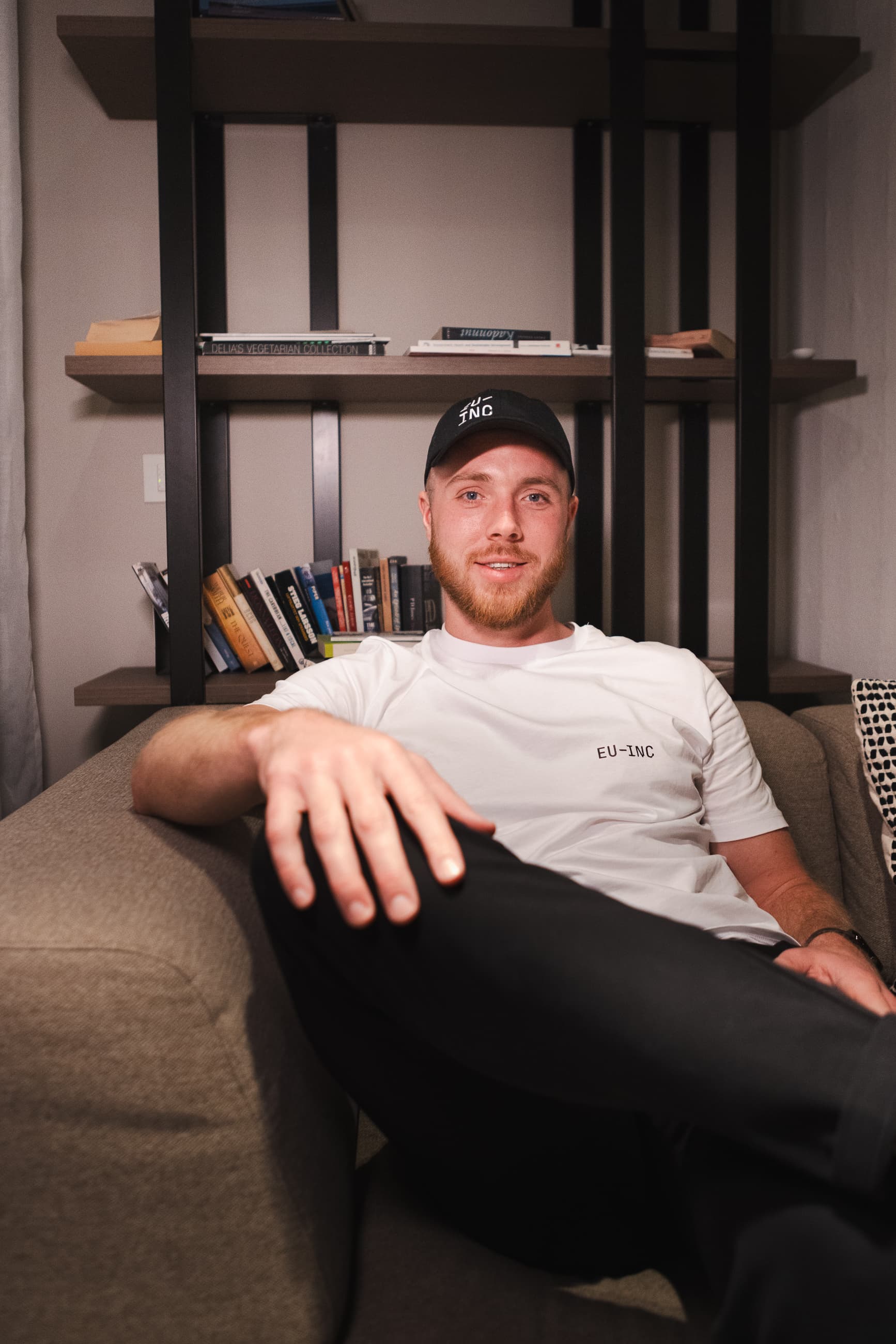
Sam Rowland
Founder

When the bar moves, hiring breaks.
After 10+yrs of working with VC-backed startups across the Nordics and Baltics, I’ve seen a lot of hiring processes up close. Across companies, markets, and role types, one pattern keeps repeating:
Teams begin a search with a clear mandate, a specific bar, specific criteria, specific outcomes they need, and then make final decisions on completely different grounds.
The scorecard they'd built in week one? Quietly abandoned by week six.
The technical bar agreed in the kickoff? Set aside for someone who “felt like a better fit,” without anyone being able to say what that meant in practice.
The rejection that left a strong candidate without any real explanation? Driven by a feeling, not a fact.
I’ve seen it enough times that I stopped thinking of it as an individual mistake founders make, it's structural.
The way hiring is built today, the bar is allowed to move. And when the bar moves, decisions stop being defensible.
The problem isn't your process. It's when your criteria get set.
Most hiring teams put serious thought into what they're looking for. They write job descriptions. They build scorecards. They align on requirements in a kick-off call.
Then the candidates start arriving.
And somewhere between the first interview and the fifth, the scorecard becomes a suggestion.
Different interviewers evaluate on different standards. The hiring manager changes what they care about after meeting someone they liked. "Culture fit", which should mean something specific and defined, ends up carrying decisions that nobody can trace back to documented criteria.
Nobody sets out to hire like this. It happens because the tools let it happen.
An ATS tracks candidates. It doesn't enforce a standard. Sourcing tools now find candidates for you. But they don't lock criteria. Interview tools record sessions. They don't require evidence before a verdict can be entered.
There's no moment in the standard hiring stack where someone is forced to say:
"here is what I'm evaluating against, here is the evidence I observed, and here is my call, tied to that evidence."
That's the gap Zero-Noise OS™ was built to fill.
What I actually wanted to exist.
I didn't want another ATS. I didn't want an AI that scores candidates. I didn't want a sourcing tool or an outreach platform.
I wanted something that sits between sourcing and the offer, the decision layer, that enforces the standard before screening starts.
Specifically:
- The scorecard locks before any candidate enters the process
- Every Advance, Hold, or Reject verdict requires observable evidence
- Decisions bind to the version of the criteria that existed when they were made
- The whole team evaluates against the same framework, not their own mental model
Not process theatre, but decision integrity.
Why this matters: mis-hires aren't random.
What I actually care about is whether the person hired performs and stays.
A fast shortlist means nothing if the decision was made on shifting criteria and the hire doesn't last eighteen months.
Proof-based hiring isn't just a cleaner process, it's a better predictor.
When every verdict is tied to specific, pre-defined evidence, you're not hiring the candidate who impressed the room on a Tuesday... You're hiring the one who actually met the bar.
That's the business case. Fewer mis-hires. Longer tenure. Decisions that hold up.
Built from the same mistakes.
I'm not a dispassionate observer here. I've been on the wrong end of these breakdowns more times than I'd like to admit.
I've placed candidates who were strong against the original brief, only to have them measured against criteria that shifted mid-process. I've watched founders and technical leaders reject exceptional engineers because the bar quietly drifted.
I've had to tell candidates they didn't get the role without being able to give them a real reason, because the decision couldn't be traced back to anything documented.
Zero-Noise OS™ exists because I needed it myself.
Who's this for?
The companies I work with - VC-backed AI and deep-tech founders and technical leaders in the Nordics & Baltics - often make 3-15+ senior technical hires a year.
Each one is high-stakes. Each one takes months. Each one has a real cost if the decision-making process breaks down.
A consistent, evidence-based hiring standard isn't a nice-to-have at that volume, especially in the age of AI CV polish vs. AI ATS screening, where there is show down between employers and applicants.
It's the difference between a process that scales and one that keeps producing decisions nobody can defend.
Why it matters more for AI-native and deep-tech teams.
AI-native and deep-tech hiring is where decision quality matters most.
Roles are often ambiguous, credentials are noisy proxies, and a single senior hire can shape architecture and velocity for 12–18 months. When the bar drifts mid-process, you don’t just get a messy shortlist, you get expensive execution risk.
Proof-based hiring keeps the standard fixed and makes decisions traceable to evidence, not impressions.
What it is (and what it isn't).
Zero-Noise OS™ is not an ATS. It doesn't replace the tools you already use for sourcing or tracking. It sits alongside them as the decision layer.
It doesn't use AI to rank or score your candidates. Ranking is someone else's answer to a different problem. The problem I'm solving is the whether the framework exists, whether it holds, whether decisions are tied to it.
It doesn't promise to eliminate bias. What it does is enforce a consistent framework, the same criteria and evidence requirement, for every candidate. Any improvement in fairness is a byproduct of consistency, not a marketing claim.
It's built specifically for technical hiring: CTOs, VPs of Engineering, technical founders who are time-poor, evidence-oriented, and tired of watching their process produce decisions that felt right in the moment and couldn't be explained three weeks later.
Where it is now.
Zero-Noise OS™ is live at app.zeronoiseos.com and in closed pilot with a select group of AI-native and deep-tech companies in the Nordics and Baltics.
If you're a technical founder or CTO hiring for senior roles and the bar keeps moving on you - I'd like to hear about it.
Pilot access is available at nordic-knight.com/zero-noise-os#pilot.